
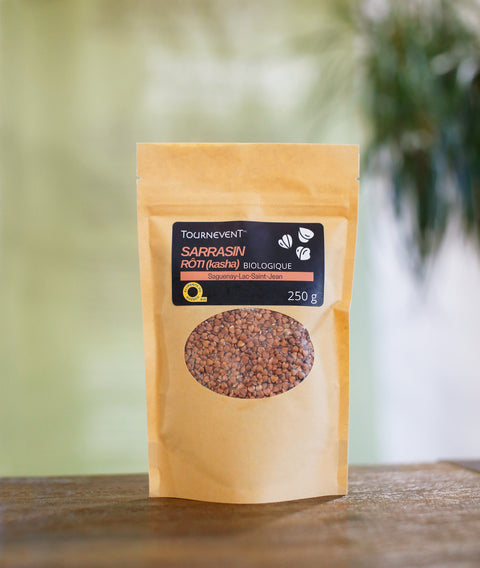

Organic roasted buckwheat
Mistakenly considered a cereal, buckwheat, sometimes also called black wheat, is actually part of the polygonaceae family, like rhubarb and sorrel. The first traces of this ancestral variety were found at the foot of the Himalayas and in the Chinese province of Yunnan. Once domesticated, it spread to Japan, Korea, and Europe at the end of the Middle Ages, meeting the Russian and Ottoman empires.
Even today, buckwheat is an essential food in the culinary cultures of Eastern Europe, particularly in Russia and Poland, which are the world's largest producers. Buckwheat flour is the star ingredient in Breton galettes, Japanese soba noodles, and buckwheat blinis.
Roasted buckwheat, also known as kasha in Russian, is used in the preparation of many regional specialties. Sobasha, roasted buckwheat tea, is very popular in Japan and Korea. Caffeine-free and very rich in magnesium and antioxidants, it has been used for centuries throughout Northeast Asia for its calming and remineralizing properties. If you come visit us here at our Économusée in Hébertville, we offer sobasha, served hot or cold.
Roasted buckwheat can be consumed both raw and cooked. With its toasted nutty flavor, the uses are numerous and easy: whether as a main ingredient like hot porridge for your breakfasts or as a finishing touch on a dish by sprinkling it to your taste.
The nutritional benefits of buckwheat are numerous: rich in vitamins and minerals, fiber, and antioxidants, and a good source of complete proteins (13g per 100g serving), buckwheat compares favorably to other whole grains by being gluten-free. It also helps regulate the level of bad cholesterol in the blood and supports cardiovascular health.
Buckwheat is also used in agriculture as a green manure. Thanks to its rapid growth, it helps suppress weeds between crop cycles and enriches the soil while protecting it from erosion.
Ingredient: Organic roasted buckwheat
